A family chalet, in Lac-Supérieur.
Ten years, a single breed, and one rule that has never changed: never more puppies than we can know by name.
It all started with a chalet passed down by Élise's Swiss grandparents.
Élise's grandparents emigrated from the Bernese Oberland — the mountainous region around Bern, Switzerland — in the 1960s. The chalet they built in Lac-Supérieur, with its wide eaves and lattice windows, is still standing: it's the one we live in today.
When it came time to choose a breed to raise, the Bernese Mountain Dog was the obvious choice. It's quite literally the dog of the region our family comes from — a sturdy, loyal mountain-farm dog that already carried the name of Bern before we ever took an interest in it.
Ten years later, we still raise them at the chalet. Litters are born by the fireplace, puppies learn the wooden staircase before they leave, and we know each one well enough to know who they should go home with.
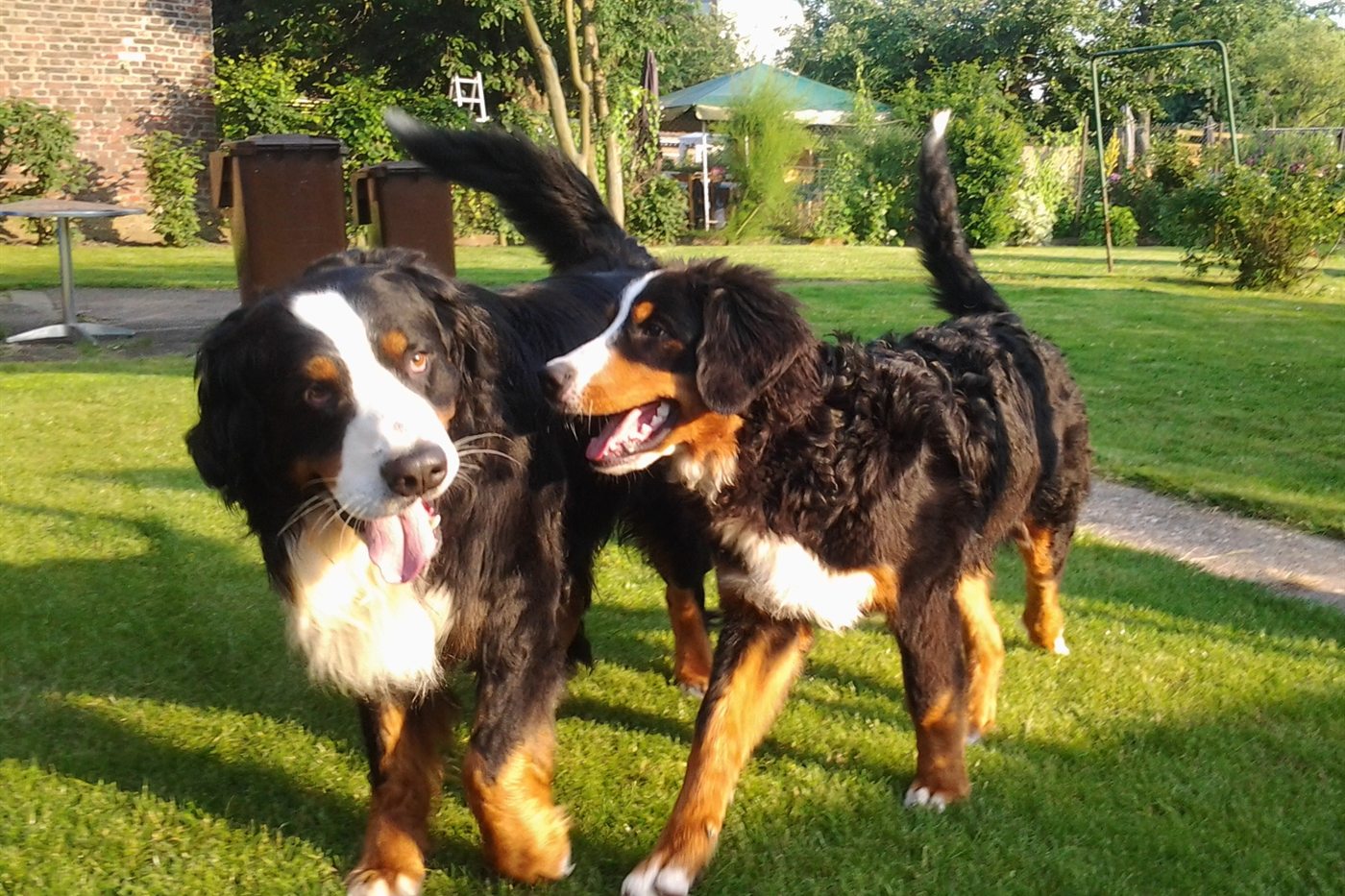
One breed, known inside out.
We don't diversify. Knowing one breed well beats skimming five.
The temperament of a gentle giant
Affectionate, steady, deeply attached to their family. The Bernese Mountain Dog copes badly with long stretches alone — this is not a dog for a home that's empty twelve hours a day, or for a very hot climate.
Worth knowing: they need company and cool air. A cool basement or a northern climate suits them far better than a south-facing apartment with no air conditioning.
A recognizable tricolour coat
Jet black, rust markings above the eyes and on the legs, a white chest blaze — often symmetrical enough to be nicknamed "the Swiss cross". A medium-long, thick coat built for the cold.
Worth knowing: shedding is heavy, nearly year-round. A sturdy vacuum quickly becomes a household ally.
What to know before adopting
A large dog (75 to 120 lb), slow to mature, needing moderate but regular exercise — a hike in the snow suits them far better than running in the heat.
Worth knowing: a shorter-than-average lifespan (7 to 9 years). We say so plainly before any reservation.
The name "Bernese Mountain Dog" comes from its original job: this breed pulled milk carts between farms in the canton of Bern and watched over cattle in the high pastures. It's a mountain farm dog before it's a lap dog — it keeps that need for company and a little purpose, even while playing.
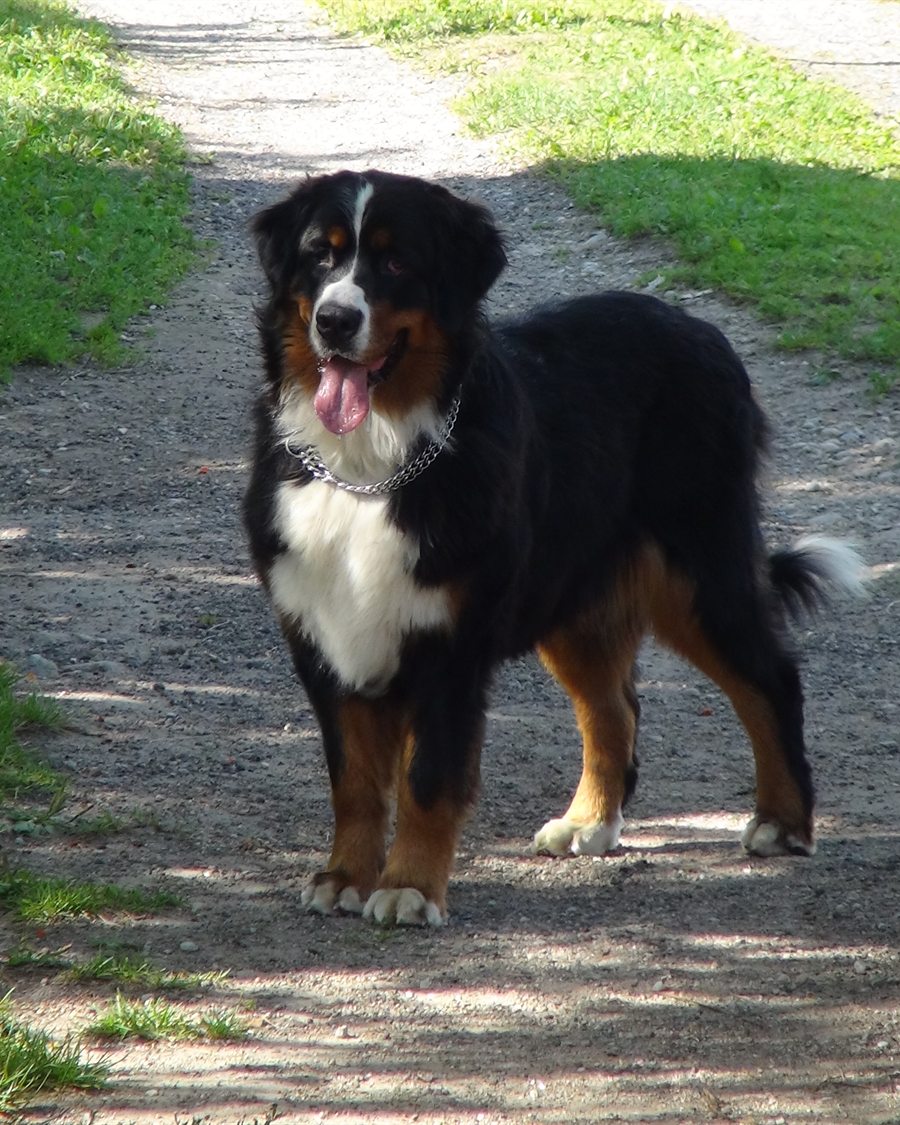
What we screen for, and what we guarantee.
No breeding happens until both parents have completed the screenings recommended for the Bernese Mountain Dog. Certificates are handed to you in person — not summarized, not "available on request".
Hips and elbows
X-rays evaluated by a recognized body, on both parents, before mating.
Heart and eyes
Cardiac screening (for subaortic stenosis) and an annual ophthalmological exam by a specialist veterinarian.
Genetic panel
DNA testing for degenerative myelopathy (DM) and von Willebrand disease (vWD), so two carriers are never paired.
A two-year guarantee against serious hereditary conditions, provided in writing. Replacement or refund, your choice.
Come see the chalet before you decide.
We welcome families by appointment, even without a firm plan. You'll see where the puppies are born, meet the parents, and get to ask the hard questions.
One piece of advice, even if you don't adopt from us: be wary of a breeder who offers to meet you in a parking lot or won't show you the mother. It's the most reliable signal there is.